


Activated Carbon
What is Activated Carbon
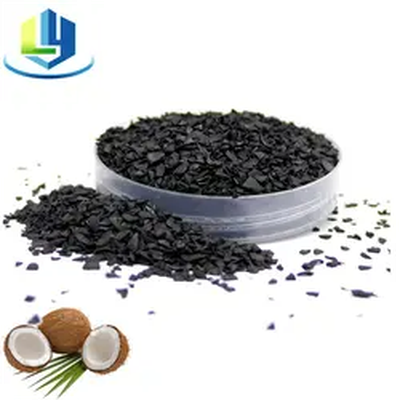
Activated carbon (also called activated charcoal, activated coal or active carbon) is a very useful adsorbent. Due to their high surface area, pore structure (micro, meso and macro), and high degree of surface reactivity, activated carbon can be used to purify, dechlorinate, deodorize and decolorize both liquid and vapor applications. Moreover, activated carbons are economical adsorbents for many industries such as water purification, food grade products, cosmetology, automotive applications, industrial gas purification, petroleum and precious metal recovery mainly for gold. The base materials for activated carbons are coconut shell, coal or wood.
Benefits of Activated Carbon
Activated charcoal to absorb excess sebum
An accumulation of sebum can clog pores, leading to the formation of imperfections such as blackheads and blackheads. By absorbing excess sebum, activated charcoal prevents the appearance of pimples and mattifies oily skin. It brings to the skin a blow of brightness and unifies the complexion.
Activated charcoal to eliminate impurities
Activated charcoal is capable of absorbing toxins and impurities present on the skin's surface. Thus, it is particularly interesting to use a product based on activated charcoal if you live in a polluted environment, to purify and detoxify the skin.
Activated charcoal to gently exfoliate the skin
Activated charcoal has a granular but soft texture that allows for a light mechanical peeling of the skin. It eliminates the dead cells on the surface of the epidermis and stimulates cell renewal.
Taste and odor control
When the right type of activated charcoal is put to use, it's possible to improve the taste of water to a noticeable degree. Odors are also effectively controlled by using activated carbon.
Absorbs many components
The reason why activated carbon is popular in water purification is because of its ability to absorb not just one or two, but many components. This makes it effective and affordable to use, qualities that any water purification plant would be interested in for the sake of its overheads and the quality of production.




Why Choose Us
Competitive prices
We offer our products at competitive prices, making them affordable for our customers. We believe that high-quality products should not come at a premium, and we strive to make our products accessible to all.
Customer Service
We firmly believe that we offer THE BEST customer support in the industry and it is our ongoing goal to continually improve on our services. As an independently owned and operated business, we are able to provide the most accommodating service possible.
Professional team
We have a team of skilled and experienced professionals who are well-versed in the latest technology and industry standards. Our team is dedicated to ensuring that our customers get the best service and support possible.
Rich experience
Has a long-standing reputation in the industry, which makes it stand out from its competitors. With over many years of experience, they have developed the skills necessary to meet their clients' needs.
Efficient and convenient
The company has established marketing networks around the world to provide high-quality services to customers in an efficient and convenient manner.
Quality assurance
In terms of quality assurance, the company strictly follows the standards and norms of the industry quality system. Adopt industry-leading testing equipment to ensure product quality and good reputation.
What Is the Difference Between Coconut Shell Charcoal and Activated Carbon
Production Process
Coconut Shell Charcoal: Coconut shell charcoal is produced by burning coconut shells in a low oxygen environment, such as a kiln or a charcoal pit. The process removes volatile compounds and leaves behind carbonized coconut shell.Activated Carbon: Activated carbon is derived from coconut shell charcoal or other carbonaceous materials. It undergoes an additional activation process to create a highly porous structure. Activation methods include physical activation (e.g., steam activation) or chemical activation (e.g., using chemicals like phosphoric acid or zinc chloride).
Porosity and Surface Area
Coconut Shell Charcoal: Coconut shell charcoal has a moderate level of porosity and surface area, which is primarily determined by the carbonization process. It retains some internal pores but not as many as activated carbon.Activated Carbon: Activated carbon has a significantly higher level of porosity and surface area due to the activation process. It contains a vast network of small pores, including micropores, mesopores, and sometimes macropores. This high porosity results in a large surface area available for adsorption.
Adsorption Capacity
Coconut Shell Charcoal: Coconut shell charcoal has some adsorption capacity due to its natural porosity, but it is relatively lower compared to activated carbon. It can adsorb certain impurities, odors, or contaminants to some extent.Activated Carbon: Activated carbon has excellent adsorption capacity due to its highly porous structure. It can adsorb a wide range of substances, including gases, liquids, and dissolved contaminants. Activated carbon is commonly used for purification, filtration, and adsorption applications.
Types of Activated Carbon
Granulated Activated Carbon
Granulated activated carbon has a smaller external surface than powdered activated carbon as a result of its slightly larger particle size. This type is mostly utilized in general deodorization, air treatment, and water treatment.
Pelletized Activated Carbon
This is powdered activated carbon that has been mixed with a binder and formed into pellets. The pellets are typically employed in gas phase applications because they have a low dust content, good mechanical strength, and a low-pressure drop.
Powdered Activated Carbon
This is a fine form of activated carbon, and it is typically added directly to process units like raw water intakes, gravity filters, and clarifiers. Due to the probable head loss that might happen, it is rarely utilized in a dedicated vessel.
Impregnated Activated Carbon
This form of activated carbon is infused with inorganic impregnates like silver and iodine. The biggest application for impregnated activated carbon is in the purification of domestic potable water.
Catalytic Activated Carbon
This fifth type of activated carbon is also called surface-modified activated carbon. In addition to being adsorptive, it may also initiate and enhance chemical processes, which makes it useful for removing contaminants from drinking water.

Organic chemicals are attracted to carbon the best. Very few inorganic chemicals will be removed by carbon. The molecular weight, polarity, solubility in water, temperature of the fluid stream and concentration in the stream are all factors that affect the capacity of the carbon for the material to be removed. VOCs such as Benzene, Toluene, Xylene, oils and some chlorinated compounds are common target chemicals removed through use of carbon. Other large uses for activated carbon are the removal of odors and color contamination.
Carbonization
The carbonization process involves heating the selected raw material in the absence of oxygen. This step drives off volatile components, such as water and tar, leaving behind carbon-rich char. The carbonization process can take place in rotary kilns, retorts, or other specialized equipment.
Physical activation
In physical activation, the carbonized char is heated to high temperatures (800-1000 degrees celsius) and treated with gases like steam or carbon dioxide. This process creates pores by causing the char to shrink and develop cracks.
Chemical activation
In chemical activation, the carbonized char is impregnated with a chemical activating agent, typically an alkali metal hydroxide or phosphoric acid. The impregnated char is then heated to moderate temperatures (500-800 degrees celsius), resulting in the development of a porous structure.
Washing and drying
The activated carbon is washed thoroughly with water to remove any residual impurities or chemical residues. The washing process may involve multiple stages and filtration. After washing, the activated carbon is dried to remove excess moisture.
Sizing and packaging
The dried activated carbon is crushed, milled, or ground to achieve the desired particle size distribution. The activated carbon may undergo additional processing steps, such as sieving or pelletizing, to obtain specific particle sizes or shapes. Finally, the activated carbon is packaged and prepared for distribution.
Applications of Activated Carbon
Air and Gas
Different kinds of activated carbon can be employed to filter gases. The specific form is chosen based on the intended outcome and includes cloth, pelletized, and granular activated carbon. Some of the most popular gas purification applications for activated carbon include removing hydrogen sulfide from natural gas and filtering breathing air in air-conditioning units. In this second application, activated carbon helps remove radon and odors from the recirculated air.
Water Treatment
Activated carbon is used in water purification as both a primary and tertiary treatment. For water purification, both granular and powdered activated carbon is used. In the initial treatment, the main purpose is to remove large particles and retain them. In the final stages of water treatment, activated carbon is used for taste and odor control.
Mining
Activated carbon is also used in mining to recover precious metals, particularly gold. Due to its adsorbent nature, activated carbon is utilized in separating carbon from cyanide in the final stages of mining.
Food and Beverages
Activated carbon is used in the food and beverage sector to enhance the purity, fragrance, and taste of several foodstuffs and beverages, including concentrated juice. Sweeteners can also be decolorized and have unwanted by-products removed from them using activated carbon.
What Are the Trends and Development Directions of Activated Carbon in the Market
Technological advancements
The market is driven by continuous technological innovation that improves the efficiency and effectiveness of activated carbon products and services. This includes advancements in materials, manufacturing processes, and digital technologies.
Growing Demand
The growing demand for activated carbon products and services, driven by factors such as population growth, urbanization, and changing consumer preferences, is a significant driver for the growth of the market.
Regulatory support
Favorable government policies, regulations, and incentives to promote the use of activated carbon, such as subsidies for renewable energy projects and carbon pricing mechanisms, encourage market growth.
Environmental awareness
The growing awareness of environmental sustainability and the need to reduce carbon emissions is driving the adoption of activated carbon solutions, especially those that are environmentally friendly and renewable.
Cost reduction
Driven by economies of scale, technological advancements, and increased competition, activated carbon solutions are becoming more affordable and accessible by decreasing production and installation costs.
Before use, activated carbon should be cleaned to remove dust. These black dusts may temporarily affect the cleanliness of the water quality. However, it is not advisable to use fresh tap water directly, as porous activated carbon can absorb large amounts of chlorine and bleach from the water and subsequently enter the filter, where it can cause damage to water quality. The usual simple cleaning is not able to remove debris that clogs the pores of activated carbon. Therefore, it is necessary to replace the activated carbon regularly to avoid losing its efficacy due to adsorption saturation. Don't wait for it to fail, so that the activated carbon continues to remove harmful substances from the aquarium water. It is recommended to replace the activated carbon 1-2 times a month. The efficiency of activated carbon for water treatment is closely related to its treatment capacity; In general, the higher the dosage, the better the effect. When a certain amount of activated carbon is used, changes in the quality of the water should be observed frequently and observed at the beginning of use, as it can be used to determine how often to replace the activated carbon.

How Does Activated Carbon Work in Dechlorination
Dechlorination is a complex mechanism that can follow different reaction pathways, in which CA can intervene as a reactant or catalyst. Free chlorine can be added to water in the form of chlorine gas, sodium hypochlorite solution, or calcium hypochlorite tablets (granules). In either case, chlorine dissolves in the form of hypochlorous acid (HOCl), a weak acid that easily partially dissociates. The distribution between hypochlorous acid and hypochlorite ions depends on the pH and concentration of these substances. Both molecular forms are defined as free chlorine. Both are strong oxidizing agents that, when added to water, react almost immediately with organic and inorganic impurities and exert a bactericidal effect on microorganisms. The chlorine that reacts and intervenes during this disinfection phase is no longer free and remains merged, no longer free. Once this stage is complete, the residual free chlorine needs to be eliminated by granular activated carbon. When activated carbon comes into contact with free chlorine, a reaction occurs in which HOCl or OCl- is reduced to chloride ions. This reduction is the result of different possible reaction pathways.
Our Factory
Our factory covers an area of 10000㎡, of which the workshop takes up 5000㎡. It is located in the East Section of Chuangye Road, Beishankou Industrial Park, Gongyi City, Henan Province, China. It has the largest fiber ball and comet fiber filter production line. It has 300 employees, 6 senior engineers, 20 technical staff. It was equipped with a perfect production technology management system and quality guarantee system.

Certifications
Certificate: All the products passed CE, SGS, AMZ, ISO9001 certificates.
The raw material passed REACH test.
Our Patents include Modified Fiber Ball Filter, Comet Fiber Filter, and Modified Comet Fiber Filter (Degreasing Dedicated).

FAQ