


Activated carbon, as an environmentally friendly adsorbent, has strong adsorption and catalytic performance, sufficient raw materials and high safety, acid and alkali resistance, heat resistance, insoluble in water and organic solvents, easy regeneration and other advantages, has strong adsorption capacity for organic pollutants dissolved in water such as benzene compounds, phenolic compounds, petroleum and petroleum products, etc. It also has a good removal effect on organic pollutants that are difficult to be removed by biological and other chemical methods, such as chroma, methylene blue surfactants, herbicides, insecticides, synthetic dyes and many synthetic organic compounds. In addition, activated carbon also has strong adsorption capacity for heavy metals in electroplating wastewater and smelting wastewater. It has an obvious clarifying effect on the turbidity of the water, and can remove the abnormal odor and peculiar smell in the water. It also has an excellent filtering effect on the bacteria. Therefore, activated carbon is getting more and more attention in water treatment. However, due to the characteristics of ordinary activated carbon, such as high ash content, small pore volume, wide distribution of micropores, small specific surface area and poor adsorption selectivity, and some limitations of its surface functional groups and electrochemical properties, its adsorption and removal of pollutants is limited, far from meeting the requirements of domestic and foreign markets. Therefore, it is necessary to modify its structure and properties to increase its adsorption capacity and relieve the pressure of water pollution.
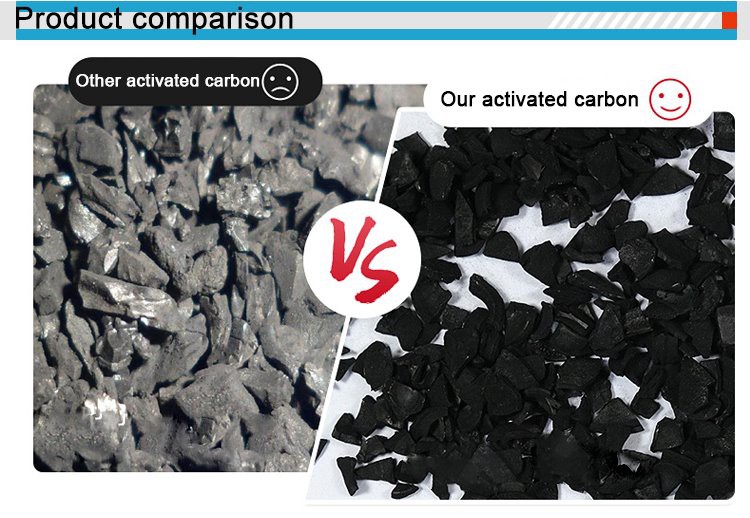

Activated carbon filter is the process of interception of pollutants in the state of suspension in the water, and the suspended matter is blocked in the gap between activated carbon. The pore size and porosity of the filter layer increase with the increase of the particle size of activated carbon. That is, the coarser the particle size of activated carbon, the larger the space to accommodate suspended matter. It shows that the filtration capacity is enhanced, the pollution carrying capacity is increased, and the pollution interception volume is increased. At the same time, the larger the pore size of the activated carbon filter layer, the more the suspended matter in the water can be transported to the next layer of activated carbon filter layer. Under the condition of sufficient protective thickness, the suspended matter can be more intercepted, so that the middle and lower filter layer can better play the interception role, and the sewage interception volume of the unit increases.
Strictly speaking, the ability of activated carbon to retain suspended matter comes from the surface area provided by activated carbon. When the flow rate is low, the filtration capacity of the unit mainly comes from the screening of activated carbon, and when the flow rate is fast, the filtration capacity comes from the adsorption of activated carbon particles on the surface. In the filtration process, the larger the particle surface area provided by activated carbon, the stronger the adhesion to suspended solids in water.


