




First, the understanding of activated carbon.
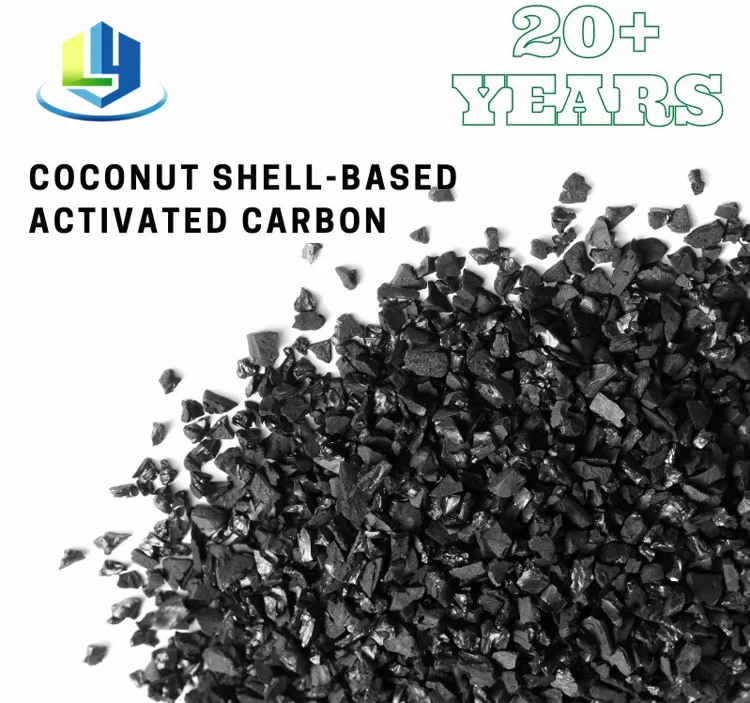
As a traditional and modern man-made material, activated carbon is mainly composed of carbon elements. Due to the internal pores of activated carbon and large surface area, so its adsorption capacity is relatively strong.
Activated carbon can use the adsorption capacity to remove harmful substances in the water, more importantly, activated carbon can also reduce the damage to the quality of water pollution, compared with other water treatment methods, activated carbon has the characteristics of a long time, low cost, even in the process of water treatment will not produce any harm to people's health chemicals.
Therefore, activated carbon has been widely recognized by people, and widely used in water treatment. At the same time, due to the different manufacturing process, appearance shape and raw material sources, activated carbon can also be divided into a variety of types.
According to the manufacturing process, it can be roughly divided into physical activated carbon, chemical activated carbon, etc.
According to the appearance of the shape, can be roughly divided into granular activated carbon, powdered activated carbon, honeycomb activated carbon, activated carbon fiber blanket, activated carbon cloth, activated carbon plate and activated carbon fiber; According to the source of raw materials, it can be roughly divided into mineral raw material activated carbon, wooden activated carbon and activated carbon made from other raw materials, etc.
Generally speaking, powdered activated carbon or granular activated carbon is more common in production. Powdered activated carbon has the advantages of strong adsorption capacity and simple manufacturing process, but the disadvantage is that the recycling rate is low, can not be reused. The advantage of granular activated carbon is the operation management, can be reused after regeneration, but the disadvantage is higher cost. It can be seen that only by fully understanding activated carbon can it be better applied in water treatment.
Second, the role of activated carbon in water treatment.
Nowadays, industrial production activities have seriously polluted the water. In order to solve the problem of water pollution, it is necessary to decontaminate the water through multiple processes. Activated carbon is a variety of different activated carbon adsorption capacity and adsorption substances are more different. From the early 1990s until now, activated carbon has been used to purify water mainly in order to remove trihalomethanes and a small amount of organic pollutants. Because excess trihalomethanes can stimulate human cells to mutate and become cancerous, trihalomethanes must be removed when drinking water is purified.
Usually, water purification plants use chlorine dioxide to treat trihalomethanes, but this method is expensive and has safety risks, so before disinfection of drinking water, usually use activated carbon to remove the pollution, adsorption of trihalomethanes in the water.
Activated carbon has a strong capacity to absorb pollution, its water purification is mainly manifested in the following aspects:
(1) activated carbon has deodorization effect, it can remove oil, phenol and other substances in the water odor, and have a certain adsorption effect on these substances.
(2) Activated carbon has a decolorization effect, it can remove the color of the water by metal or plant decomposition of substances. And can reduce the color of organic matter, so as to remove the noise in the water.
(3) Activated carbon can remove trihalomethanes in water. The water polluted by industrial sewage will contain a certain amount of trihalomethanes, which is very harmful to human safety and health. Activated carbon can effectively absorb trihalomethanes.
(4) Remove organic pollutants such as pesticides. At present, the main culprit of water pollution is all kinds of organic compounds such as pesticides and aromatic compounds, which can not be digested by the organisms in the water and pollute the water.
(5) Remove heavy metals from water.