





Aluminum is widely distributed in the earth's crust, with a content as high as 8.8%, ranking third only to oxide and silicon. Aluminum is ubiquitous in food, drinking water and anti-acid preparations, and studies have shown that aluminum is related to Alzheimer's disease. Therefore, the problem of excessive aluminum in the effluent of water plants has become one of the key issues in the water production process, and it is also one of the important breakthrough points for improving the water quality of high-quality drinks.
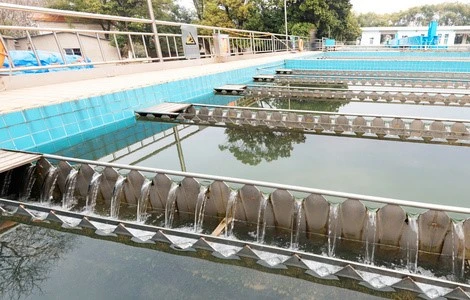
When aluminum salts are used as water treatment chemicals, the factors affecting the aluminum content of the effluent mainly include pH of source water, water temperature, and alkalinity. All through these years of practice-development, it has been found that the most essential factors affecting the aluminum content of the effluent are the pH of the source water, the influence of water temperature and alkalinity on aluminum,which is also the pH of the raw water in the final analysis. In the correlation analysis of the influence of water temperature and aluminum content, it is found that there are different optimum pH values for aluminum removal under different water temperature conditions. As it decreases, there is a phenomenon that the effluent aluminum increases with the increase of water temperature. In the correlation analysis of the influence of alkalinity and aluminum content, it is found that in the coagulation stage of water treatment, the water treatment chemicals used contains acid components, this part of the acid first needs to be used to neutralize the alkalinity of the water. The level of alkalinity also determines the amount of acid consumed in the water purifier. The remaining acid used to lower the pH in the water agent is also less, so the higher the alkalinity of the raw water, the less obvious the effect of reducing aluminum.
Hydrochloric acid dosing.
At present, some water companies adopt the carbon dioxide dosing process, which belongs to the same category as the hydrochloric acid dosing process. The dosing point of hydrochloric acid is the raw water suction well, and the dosage of hydrochloric acid is adjusted in real time according to the pH of the source water after adding acid (control value 7.4-7.8). In practice, the pH online meter is used to monitor whether the dosage of acid is appropriate, after adopting this process, the cost of hydrochloric acid agent is also cheap.
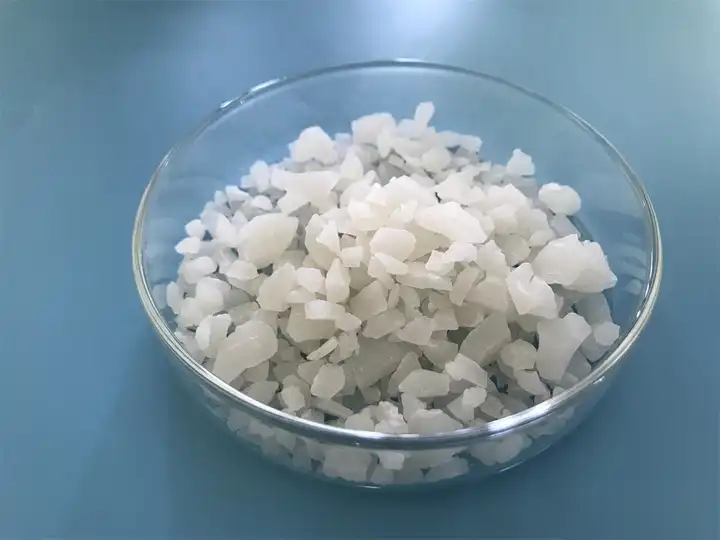
Aluminum sulfate
Aluminum sulfate dosing.
Based on our practice, the effect of reducing aluminum was average. In the case of continuous high-temperature days, the ex-factory aluminum was barely controlled at about 0.10mg/L. The disadvantages of the process is to achieve the requirement that the ex-factory aluminum is lower than 0.10mg/L, the dosage of aluminum sulfate is twice as much as that of conventional polyaluminium, and the cost of aluminum sulfate per ton of water is 120% higher than that of conventional polyaluminium.
Acidified polyaluminium chloride dosing.
By artificially reducing the pH value of polyaluminum chloride, when the water treatment chemical is added to the water plant, the purpose of reducing the pH of raw water is indirectly achieved. However, due to the additional amount of hydrochloric acid added in the production process of the polyaluminum, its pH does not meet the requirements of some countries' Standards.
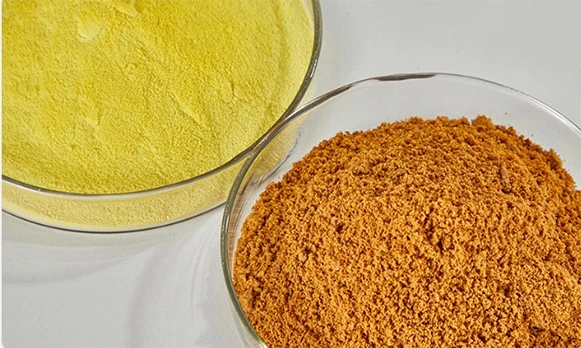
Polyaluminium Chloride
So, is there any other better solution? Maybe it' s better to find ways to improve specifications of flocculants itself. In recent years, we have been searching and justifying that high salinity polyaluminum chloride and iron salt coagulation aid also have the effect of reducing aluminum in the practice of aluminum reduction research, and carried out a series of small tests, pilot tests and promotion and application work.
In the hydrolysis reaction of polyaluminum, its aluminum ion has three hydrolyzed forms, namely Ala (single-nuclear form), Alb (medium polymerization form), Alc (inert state polymeric macromolecule or sol polymer), where the proportion of Alc is positively correlated with the basicity of polyaluminum. After hydrolysis of polyaluminum with high salinity, Alc is the main content, while Ala accounts for a small proportion, which is conducive to improving the coagulation effect and reducing the solubility of aluminum in water. The original polyaluminum (with a basicity of 60-70%) is changed to a high-basic polyaluminum (with a basicity of more than 80%), and the original dosing facilities, process and dosage are basically constant. After adopting this process, under the premise of achieving the effect of aluminum control, the cost of polyaluminum agent with high salinity per ton of water is 60% lower than that of adding aluminum sulfate.