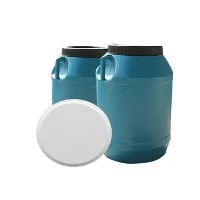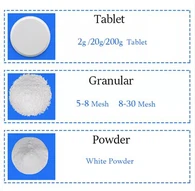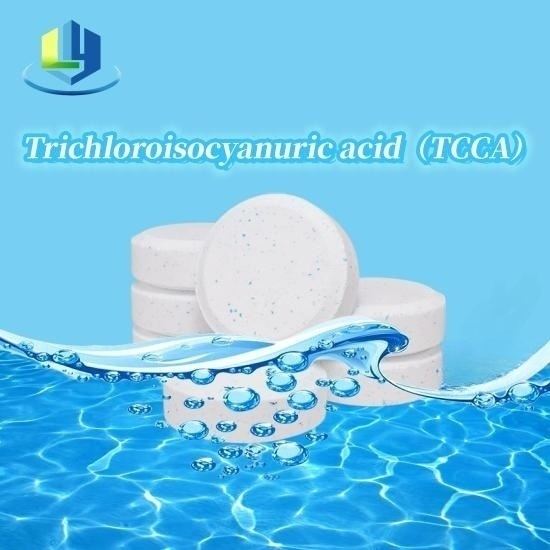
25kg 50kg Plastic Drum Package 90% Swimming Pool Water Chemical Calcium Hypochloride Tablets
Trichloroisocyanuric acid is not only widely used as a disinfectant and fungicide, but also widely used in industrial production. Trichloroisocyanuric acid contains up to 90% active chlorine and is used as a bleaching agent in the printing and dyeing industry. It is suitable for bleaching cotton, linen, wool, synthetic fibers, and blended fibers. Not only does it not damage fibers, but its performance is better than that of sodium hypochlorite and bleach, and it can also replace imported sodium hypochlorite for use.

This product accounts for over 90% of active chloride fungicides and is mainly used in swimming pools, industrial water treatment agents, tableware automatic cleaning agents, bleaching agents, daily disinfectants, and industrial cleaning. Trichloroisocyanuric acid has the highest yield among chloroisocyanuric acid products and is an extremely important N-chloroimide compound.
Compared with traditional chlorinating agents such as liquid chlorine, bleaching powder, and bleaching powder, trichloroisocyanuric acid has the characteristics of high effective chlorine content, stable storage and transportation, convenient molding and use, high sterilization and bleaching power, long release time of effective chlorine in water, safety and non-toxic.
Product index

Chemical formula : C3Cl3N3O3
Molecular weight : 232.41 InChI InChI=1/C3Cl3N3O3/c4-7-1(10)8(5)3(12)9(6)2(7)11
InChIKey YRIZYWQGELRKNT-UHFFFAOYSA-N
Density : 2.07 Fusing point : 249-251 °C (lit.) Boiling point : 272.3±23.0 °C(Predicted)
Flash point :121°C Water soluble : 1.2g /100mL (25 ºC) Steam pressure : 0.001-0.002Pa at 20-25℃
Solubility Chloroform: (Sparingly, Heated), DMSO (Sparingly)
Acidity coefficient : -4.49±0.20(Predicted) PH : 2.0-2.7 (10g/l, H2O, 20℃) Storage conditions : Store below +30°C.
Stability : Stable. Hygroscopic, and may decompose in contact with moisture. Contact with combustible material may lead to fire. Incompatible with acids, reducing agents, water, strong oxidizing agents.
Sensitivity : Hygroscopic Appearance:Tablet, Powder or Granules Color: white, blue or white and blue
Chlorine odor Merck 14,9641 BRN 202022
TCCA decomposes into hypochlorous acid and cyanuric acid in water, with hypochlorous acid having a bactericidal ability 80 times that of hypochlorous acid, and the presence of isocyanuric acid also makes hypochlorous acid more stable in water, exhibiting some characteristics different from other chlorine containing fungicides.
Application areas
Fishery Applications

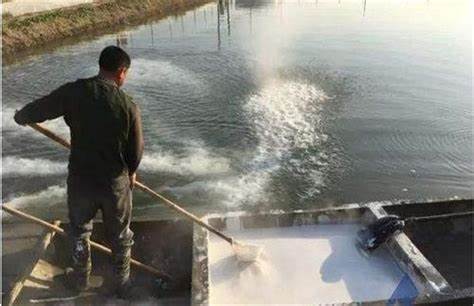
Trichloroisocyanuric acid, as a disinfectant for seawater, has the characteristics of broad-spectrum antibacterial activity, strong bactericidal power, low odor, good stability, low cost, low toxicity, safety, and environmental protection. It has been widely used in the treatment and prevention of aquatic biological diseases.
Trichloroisocyanuric acid is an extremely strong oxidant and chlorinator, with strong killing effects on bacteria, viruses, fungi, and bacterial spores. This product can be applied to most aquatic biological and bacterial diseases, and can be used with confidence under normal usage.
Disinfection in the medical field


TCCA can be used for disinfection of medical devices and equipment, as well as for disinfection during patient surgery. Through observation, it was found that using TCCA flushing during abscess incision, puncture, drainage, and other operations can avoid the spread of bacterial infection caused by abscess resection, achieving infection control and biological cure standards. The research shows that TCCA disinfection of oral models can effectively kill hepatitis B virus, and also has a good killing effect on bacteria and fungi. The effect is better than immersion, spray and irradiation disinfection measures, which can reduce the risk of cross infection and has clinical application value.
Disinfection of public places

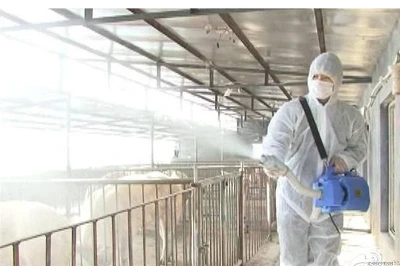
It is mainly used for sterilization and disinfection in public places; Due to its excellent algal killing, deodorization, water purification, and bleaching effects, it can be used for disinfection of swimming pools, drinking water disinfection, industrial water recycling treatment, food processing industry, food hygiene industry, aquaculture industry, daily chemical industry, medical and other places. At the same time, this product can also be used in special Chemicalbook fields such as post disaster road cleaning and disinfection.
Disinfection of swimming places

TCCA can effectively kill various bacteria in the swimming pool, without residue or polluting the environment. The water body has little irritation to human skin and eyes, and can also maintain the clarity of the pool water. At present, there is little research on the toxicity risk of by-products produced by TCCA in water disinfection.
Due to the advantages of low dosage, good disinfection effect, convenient use, and no solid residue, trichloroisocyanuric acid is widely used in the field of swimming pool water disinfection.
Usage and dosage:
1. Swimming pool disinfection: 3-5 grams per cubic meter per day are used in the swimming pool.
2. Treatment of industrial circulating cooling water: Add 0.5 grams per 1m3 of water.
3. Disinfection of tableware. Add 0.25 grams of water to every 5 kilograms and soak the cleaned tableware for 5 minutes.
4. Sewage and fecal treatment. Adding 5 grams per cubic meter of sewage or feces can eliminate odors.
5. Seed sterilization and disinfection. Using TCCA as seed disinfection can break the dormancy period of seeds, improve seed germination rate, inhibit the occurrence of diseases, and importantly, it does not cause environmental pollution and is harmless to humans and animals. The method is to soak the seeds in 0.2% TCCA aqueous solution for 12 hours.
6. Sterilization and disinfection in the aquaculture industry.
7. Used for disinfecting hospital sewage, diapers, urinals, medicine bowls, and instruments, with fast sterilization speed and good results.

Precautions for use
When using TCCA, it's important to follow the manufacturer's instructions carefully and to wear protective gloves and eye protection, as it can be hazardous if not handled properly. TCCA should be stored in a cool, dry place away from direct sunlight, and should not be mixed with other chemicals or substances, as this can create hazardous reactions.
- Keep the container dry.
- In case of contact with eyes, rinse immediately with plenty of water and seek medical advice.
- In case of fire or explosion, do not inhale smoke.
- The substance and its container shall be disposed of as hazardous waste.
- Avoid release into the environment. Refer to the special instructions/safety data sheet.