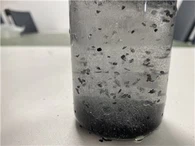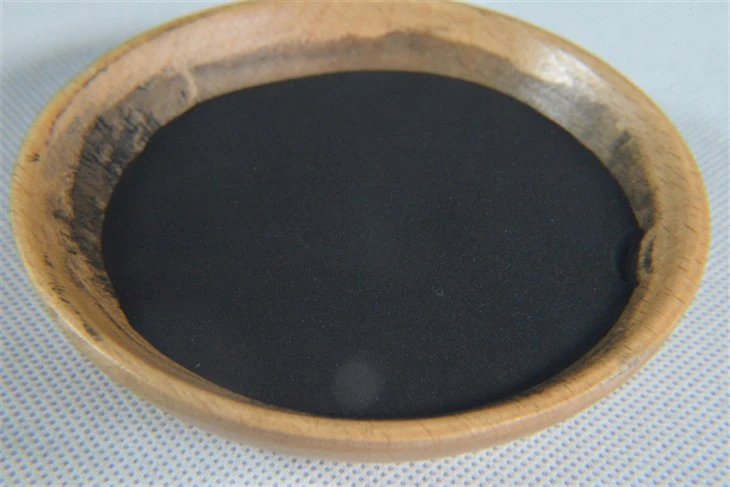
Activated carbon has columnar, powdery, and granular forms. It is obtained by carbonization of coal, wood, hard fruit shells, fruit kernels, and resin under isolated air conditions at a high temperature of 600-900 ℃, followed by oxidation activation with air, carbon dioxide, water vapor, or a mixture of the three gases at 400-900 ℃.

Usage
Chemical purification
Activated carbon is commonly used on the laboratory scale to purify solutions of organic molecules containing unwanted colored organic impurities.
Filtration over activated carbon is used in large-scale fine chemical and pharmaceutical processes for the same purpose. The carbon is either mixed with the solution then filtered off or immobilized in a filter.
Mercury scrubbing
Activated carbon, often infused with sulfur or iodine, is widely used to trap mercury emissions from coal-fired power stations, medical incinerators, and from natural gas at the wellhead. But the mercury-laden activated carbon presents a disposal dilemma. If the activated carbon contains less than 260 ppm mercury, allow it to be stabilized (for example, trapped in concrete) for landfilling. However, waste containing greater than 260 ppm is considered to be in the high-mercury subcategory and is banned from landfill.
| specification | value |
|
Relative density |
1.95 (nitrogen replacement method) |
|
Apparent density |
O.2~O.3g/cm3 |
|
The average particle size |
30~45nm |
|
Specific surface area |
55~70m2/g |
|
Iodine absorption value |
60~80gI2/kg |
|
Carbon content |
>99.5% |
|
Hydrogen content |
<0.1% |
|
Oxygen content |
0.07%~0.26% |
|
pH value |
5~7 |