


When maintaining a swimming pool, selecting high-quality filter balls is crucial for ensuring clean water. However, given the vast array of filter ball types and brands on the market, how can one quickly identify a superior product? This article shares several techniques-based on visual inspection and tactile assessment-to help you quickly evaluate the quality of filter balls, enabling you to select the best option for your sand filtration system and keep your pool water crystal clear.
Observing the Appearance of the Filter Balls
Color and Consistency: High-quality filter balls typically exhibit consistent coloring; whether white, blue, or another shade, the color should be uniform throughout. If you notice uneven coloring, distinct color variations, or spots on the filter balls, this may indicate that the materials were not mixed uniformly during production, thereby compromising the product's quality.
Surface Smoothness: The surface of high-quality filter balls should be smooth, free of obvious burrs or defects. You can gently run your fingers over the surface to gauge its smoothness. If the surface feels rough, has sharp edges, or features irregular protrusions, it could negatively impact filtration efficiency or even damage your pool's filtration system.
Structural Integrity: Examine the filter balls to ensure their structural integrity. High-quality filter balls should possess a regular shape and feel full and firm. If a filter ball feels loose or appears deformed, it may lead to reduced filtration efficiency during use and could even disrupt the pool's water circulation system.
Assessing Filter Ball Quality Through Touch
Softness and Elasticity: Gently squeezing a filter ball allows you to assess its softness and elasticity. High-quality filter balls should be moderately soft and highly resilient, springing back to their original shape quickly. If a filter ball feels excessively hard, it may be made of inferior material, making it prone to breakage and abrasion. Conversely, filter balls that are too soft may fail to effectively filter out fine particles.
Weight: While remaining lightweight for ease of handling, high-quality filter balls should still possess a certain amount of substance. You can use your sense of touch to determine if the weight feels appropriate. Filter balls that are too light may lack sufficient density, resulting in poor filtration performance; conversely, filter balls that are too heavy can place an excessive strain on the pool pump, thereby reducing the overall efficiency of the filtration system.
Fine Texture Gently rub a filter ball against your palm to assess its texture. High-quality filter balls have a fine, smooth texture with no noticeable roughness. If a filter ball feels coarse, it may be the result of poor manufacturing processes, making it susceptible to abrasion and shedding during use.
Assessing Filter Ball Quality Through Testing
Water Immersion Test: Immerse the filter balls in water and observe their water absorption rate and saturation state. High-quality filter balls should absorb water rapidly and retain their shape once saturated. If the filter balls absorb water slowly or deform after absorption, it may indicate poor absorbency and structural stability.
Filtration Performance Test: In a practical setting, you can assess the effectiveness of the filter balls through water quality testing. Install the filter balls into your pool filtration system; after running the system for a period of time, test the water for levels of suspended particles and impurities. High-quality filter balls should significantly reduce the concentration of suspended particles in the water, thereby improving overall water clarity.
How to Avoid Common Filter Ball Issues
Preventing Clogging: To prevent the filter balls from becoming clogged, it is recommended to clean and replace them periodically. You can clean the filter balls by rinsing them with water or gently squeezing them to ensure they remain permeable. Additionally, avoid exposing the filter balls to excessive oils and chemicals, as these substances can compromise their absorption capacity and service life.
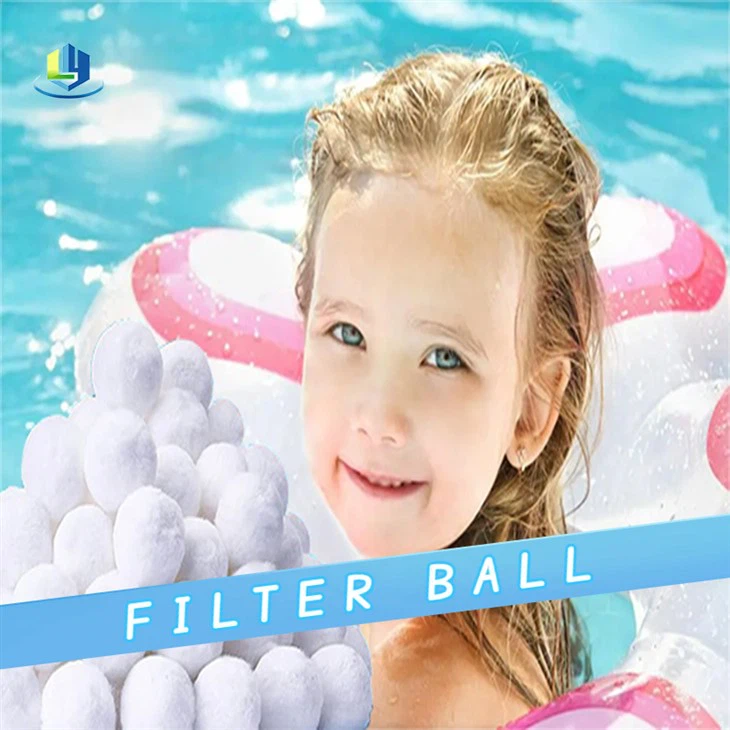
Regular Inspection: Inspect the filter balls regularly to ensure they are not severely damaged or worn out. If you discover that the filter balls are deformed, damaged, or if filtration performance has declined significantly, replace them immediately to ensure the filtration system continues to operate effectively.
Proper Storage: When the filter balls are not in use, store them in a cool, dry place away from direct sunlight and high temperatures. Proper storage practices can extend the service life of the filter balls and help maintain their consistent performance.