


Activated carbon, is a specially treated carbon that heats organic raw materials (rice husks, coal, wood, etc.) in the absence of air to reduce non-carbon components (this process is called carbonization), and then reacting with the gas, the surface is corroded to produce a microporous structure (this process is called activation). Because the activation process is a microscopic process, that is, the surface erosion of a large number of molecular carbides is point erosion, resulting in numerous small pores on the surface of activated carbon. The diameter of micropores on the surface of activated carbon is mostly between 2-50nm. Even a small amount of activated carbon has a huge surface area. The surface area per gram of activated carbon is 500-1500m2. Almost all applications of activated carbon are based on this characteristic of activated carbon.
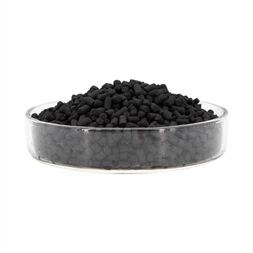


Usage
1.Air purification, such as using activated carbon from the air containing solvent vapors recovered solvents;Use activated carbon filter method to make the air deodorization;Used in gas masks and respirators used industry, in order to defense poison, etc.
2.Sewage farm exhaust adsorption
3.Potable water treatment
4.Power plant water pretreatment
5.Waste water recycling treatment before
6.Biological wastewater treatment
7.Toxic waste water treatment
8.Solvent recovery (because of the activated carbon adsorption of organic solvents)
9.Chemical storage exhaust purification
10.Automobile tail gas purification
11.Gas separation
|
Type |
Moisture content |
Hardness |
Apparent density g/L |
Iodine number mg/g |
Methyl blue mg/g |
Ash content |
Particle size /mm |
|---|---|---|---|---|---|---|---|
|
Columnar 30
|
≤5%
|
≥91% |
450-550 |
850-1100 |
≥120 |
10%-15% |
3
|
|
Columnar 25
|
≤5%
|
≥91% |
450-550 |
850-1100 |
≥120
|
10%-15% |
2.5
|
|
Columnar 20
|
≤5%
|
≥91%
|
450-550 |
850-1100 |
≥120
|
10%-15% |
1.5
|
|
Columnar 15
|
≤5%
|
≥91%
|
450-550 |
850-1100 |
≥120
|
10%-15% |
2
|
|
Crushed 8×16 Mesh |
≤5%
|
≥91%
|
420-480 |
900-1100 |
≥120
|
10%-15% |
1.5-2.5 |
|
Crushed 8×30 Mesh
|
≤5%
|
≥91% |
420-480 |
900-1100 |
≥120
|
10%-15% |
0.6-2
|
|
Crushed 12×40 Mesh |
≤5%
|
≥91% |
400-460 |
900-1100 |
≥120 |
10%-15% |
0.4-1.5
|
|
Extruded 8×4 Mesh
|
≤5%
|
≥95%
|
380-440 |
1000-1200 |
≥160 |
5%-10% |
2.5-4
|
|
Extruded 8×16 Mesh
|
≤4%
|
≥95%
|
380-440 |
1000-1200 |
≥160
|
5%-10% |
1.5-2.5
|
|
Extruded 8×30 Mesh
|
≤4%
|
≥95%
|
380-440 |
1000-1200 |
≥160
|
5%-10% |
0.6-2
|
|
Extruded 12×40 Mesh
|
≤4%
|
≥95%
|
380-440 |
1000-1200 |
≥160
|
5%-10% |
0.4-1.5
|


