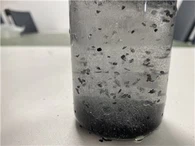
Bamboo Based Powder Activated Carbon
Bamboo activated carbon, is a specially treated carbon that heats organic raw materials high quality bamboo in the absence of air to reduce non-carbon components (this process is called carbonization), and then reacting with the gas, the surface is corroded to produce a microporous structure (this process is called activation). Because the activation process is a microscopic process, that is, the surface erosion of a large number of molecular carbides is point erosion, resulting in numerous small pores on the surface of activated carbon.

Activated carbon is porous carbon material.Due to its highly developed porous structure and huge specific surface area, activated carbon has very strong adsorption capacity, Its pores include micropores mesopores and macropores,There are many oxygen containing functional groups on the surface of activated carbon, Activated carbon can also be impregnated with chemical substance to produce impregnated activated carbon.
Powder Activated carbon It has small,low-volume pores that increase the surface area available for adsorption.
Due to its high degree of microporosity, just one gram of activated carbon has a surface area in excess of 3,000 m2 (32,000 sq ft), as determined by gas adsorption. So it will strongly attract and absorb dirt color ,toxins from skin and teeth.The food grade activated charcoal powder is made of high quality pure bamboo.
Main parameter for Powdered Activated Carbon
The PH,Moisture and other parameter basis on customer requirements
The additional inspection items to be executed according to the customer's requirements
| Item | Activated carbon powder |
| Size ( Mesh ) | 80-600 |
| PH | 6-8( can be adjusted ) |
| Hardness | >90 |
| Iodine Value | 700-1200 |
| Ash (%) | <5% |
| Methylene Blue Adsorption (mg/g) | >120 |
Activated carbon, in 50% w/w combination with celite, is used as stationary phase in low-pressure chromatographic separation of carbohydrates (mono-, di-, tri-saccharides) using ethanol solutions (5–50%) as mobile phase in analytical or preparative protocols.


Usage (Powder activated carbon ) :
Chemical purification :
Activated carbon is commonly used on the laboratory scale to purify solutions of organic molecules containing unwanted colored organic impurities.Filtration over activated carbon is used in large scale fine chemical and pharmaceutical processes for the same purpose. The carbon is either mixed with the solution then filtered off or immobilized in a filter.
Mercury scrubbing :
Activated carbon, often infused with sulfuror iodine, is widely used to trap mercury emissions fromcoal-fired power stations, medicalincinerators, and fromnatural gasat the wellhead. But the mercury-laden activated carbon presents a disposal dilemma.If the activated carbon contains less than 260 ppm mercury, allow it to be stabilized (for example, trapped in concrete) for landfilling.However, waste containing greater than 260 ppm is considered to be in the high-mercury subcategory and is banned from landfilling.
Food additive :
Activated, food-grade charcoal became afood trendin 2016, Food grade activated carbon mainly refers to bamboo activated carbon powder.
Skincare :
The adsorbing aspects of activated charcoal have made it a popular additive in many skin care products. Products such as Activated Charcoal Soapsand Activated Charcoal Face Masksand scrubs combine the use of the charcoal's adsorption ability along with the cleansing ability of soap.

Industrial :
One major industrial application involves use of activated carbon in metal finishing for purification of electroplating solutions. For example, it is the main purification technique for removing organic impurities from bright nickel plating solutions. A variety of organic chemicals are added to plating solutions for improving their deposit qualities and for enhancing properties like brightness, smoothness, ductility, etc.
Due to passage of direct current and electrolytic reactions of anodic oxidation and cathodic reduction, organic additives generate unwanted breakdown products in solution. Their excessive build up can adversely affect plating quality and physical properties of deposited metal. Activated carbon treatment removes such impurities and restores plating performance to the desired level.
Medical :
Activated carbon is used to treatpoisoningsandoverdosesfollowing oralingestion. Tablets or capsules of activated carbon are used in many countries as an over-the-counter drug to treatdiarrhea,indigestion, andflatulence. and is particularly effective against poisonings ofstrong acidsorbases,cyanide,iron,lithium,arsenic,methanol,ethanolorethylene glycol.Activated carbon will prevent these chemicals from being absorbed into the human body.It is on theWorld Health Organization's List of Essential Medicines.
Analytical chemistry :
Activated carbon, in 50%w/wcombination withcelite, is used as stationary phase in low-pressurechromatographicseparation ofcarbohydrates(mono-, di-, tri-saccharides) usingethanolsolutions (5–50%) asmobile phasein analytical or preparative protocols.Activated carbon is useful for extracting the direct oral anticoagulants (DOACs) such as dabigatran, apixaban, rivaroxaban and edoxaban from blood plasma samples.For this purpose it has been made into "minitablets", each containing 5mg activated carbon for treating 1ml samples of DOAC. Since this activated carbon has no effect on blood clotting factors, heparin or most other anticoagulantsthis allows a plasma sample to be analyzed for abnormalities otherwise affected by the DOACs.

Environmental :
Carbonadsorptionhas numerous applications in removingpollutantsfrom air or water streams both in the field and in industrial processes such as:
Spill cleanup
Groundwaterremediation
Drinking waterfiltration
Air purification
Volatile organic compoundscapture frompainting,dry cleaning,gasolinedispensing operations, and other processes
Volatile organic compoundsrecovery (solvent recovery systems, SRU) fromflexible packaging,converting,coating, and other processes.