


In the treatment of oily sewage in oil fields, there is a problem that the quality of sewage does not meet the standard. There are many factors that cause this situation, the most important of which is the problem of the filter.
Filtration is the last resort to remove suspended solids and oils. In order to meet the corresponding standards, the contained suspended particles, oil and algae are intercepted and adsorbed. The application of modified fiber ball filter in it can effectively improve the treatment effect.
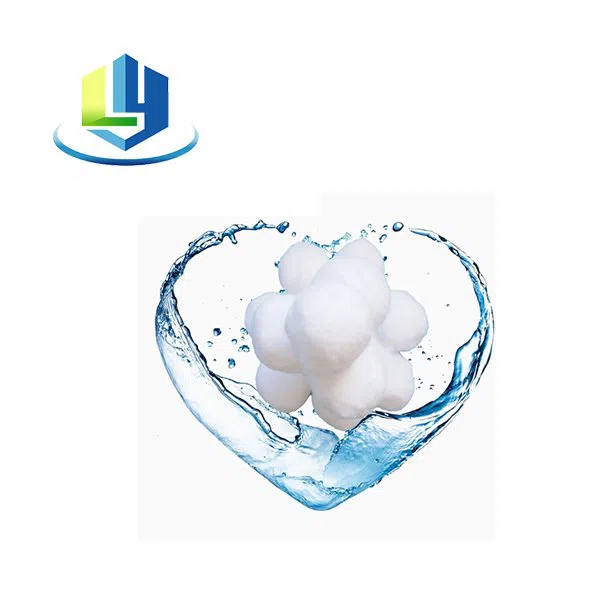
Characteristic Analysis of Modified Fiber Ball Filter
The wire diameter is relatively small, and the surface area can reach 2000 square meters per gram. After effective stacking, the porosity can be guaranteed to be higher than 80%, and the retention effect is better than that of traditional filter media.
The modified fiber ball filter is hydrophilic and non-stick oil. After encountering water, many water molecules will gather on the surface of fiber filaments and form a layer of water film on the surface, which plays a good role in separating oil from fiber balls ground.
Through backwashing, the oil stains on the surface of the fiber ball can be removed, and it has regeneration performance.
The mechanism of organic matter/oil removal by modified fiber balls is: inertial interception, direct interception and electrochemical adsorption.
The oil content of the water before filtration is less than or equal to 15mg/L, and the suspended matter is less than or equal to 10mg/L; the oil content of the filtered water is less than or equal to 5mg/L, and the suspended matter is less than or equal to 2mg/L.
The surface of the fiber ball is modified to enhance the adsorption capacity of oil and organic matter; in the new modified fiber ball ligation method, the porosity of the filter layer gradually decreases along the direction of water flow during operation, forming an ideal filter material.
In the pore distribution state, the filtration effect is better; the filtration speed is high, up to 25-30m/h. The filter material only needs to be replenished by about 10% every year, and there is no need to replace it.
The biggest difference between modified fiber balls and ordinary fiber balls is that they are a polymer with poor dyeing properties, which is different from textiles.
It has the advantages of good effect, high precision, easy cleaning and long service life, and is widely used in sewage treatment in oil fields, petrochemicals, printing and dyeing and other industries.
Modified fiber ball filter working principle:
The suspended matter of the equipment will accumulate on the surface of the medium, and the filter cake will be formed through bridging, filtration and other processes to improve the filtration accuracy. At the same time, the pores of the filter material will also be reduced, increasing the filtration resistance.
When the resistance increases to a certain extent, the bridging relationship will be damaged by the impact of subsequent suspended particles, and new larger suspended particles will replace the destroyed bridging relationship and continue to filter the suspended solids in the oily sewage.
Comparison of Modified Fiber Ball Filters with Other Filter Media
Walnut shell filter material: strong adsorption capacity, high hardness, wear resistance, and large filtering capacity, but the effect of removing suspended solids in oily sewage is poor.
Double-layer filter material filter: strong dirt holding capacity, simple operation, convenient operation and management, more suitable for advanced sewage treatment.
Quartz sand filter: the most widely used equipment in the oil field water treatment system at present, because of its simple structure, convenient maintenance and convenient operation, it has a good sewage treatment effect.
As a new type of oilfield sewage fine filtration equipment, the modified fiber ball filter has obvious advantages: including hydrophilic and oleo phobic, large specific surface area, high porosity, good regeneration performance, etc., and the advantages are more obvious in low-permeability oil layers. Work. , which can achieve high-precision filtration and play an important role in improving the sustainability of oilfield development operations.