


Product Description
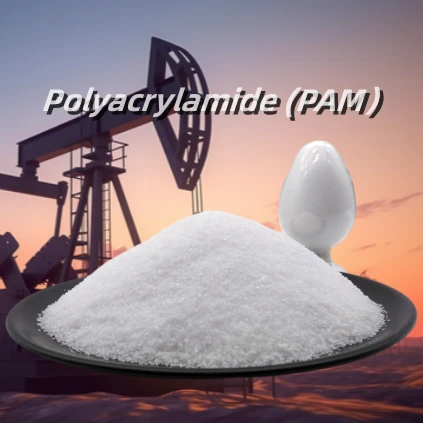
Due to the fact that water is the most cost-effective solvent and water-based working fluids are mainly used in oil and gas drilling and extraction operations, the polymer materials used in oil and gas extraction are mostly water-soluble. Although there are many types of water-soluble polymers, so far, the most widely used water-soluble polymers in oil and gas extraction operations on a large scale are polyacrylamide and its derivatives obtained by copolymerization with other water-soluble monomers.
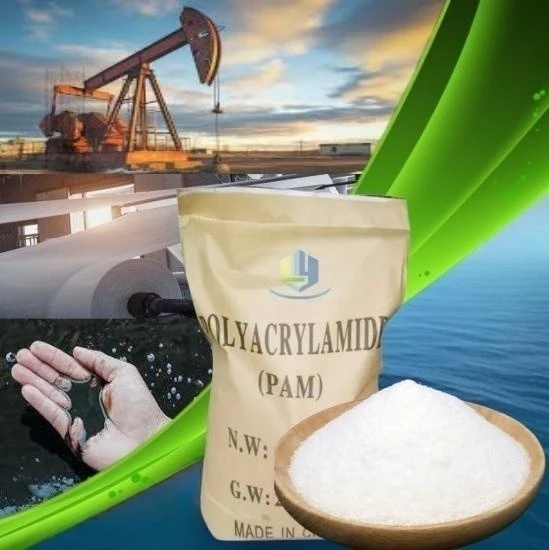
Based on the properties of polyacrylamide such as viscosity increase, flocculation, and drag reduction, it is widely used in drilling, completion, acidification, fracturing, water plugging, profile control, tertiary oil recovery, water treatment, and other aspects in oil and gas production processes.
Product advantage
The principle of polymer flooding is mainly to use the viscosity of water-soluble polyacrylamide divided into chains, improve the mobility ratio of conventional displacement fluids, improve displacement efficiency and swept volume, and thus achieve the goal of improving oil recovery.
(1) The low oil-water flow ratio of the road can change the partial flow curve. This indicates that it can reduce the water content of the produced fluid, improve the oil recovery rate, and have better displacement effects.
(2) By improving the mobility ratio of water drive, polymer flooding can improve the viscous fingering phenomenon of perfume flooding in the heterogeneous plane, and improve the plane sweep efficiency; In vertically heterogeneous formations, the polymer segment first enters the high permeability layer and uses its high viscosity characteristics to "block" the high permeability layer, causing subsequent water flooding to shift into the low permeability layer, increasing the water absorption thickness and expanding the vertical sweep efficiency.
(3) The polymer undergoes adsorption, mechanical trapping, and other actions when passing through the porous medium, resulting in retention, changing the permeability of the gap where the polymer is located. The part of the adsorbed polymer molecular chain that faces the fluid has hydrophilicity, which can reduce the relative permeability of the water phase without reducing the relative permeability of the oil phase, that is, to block water without blocking oil.
At the same time, polymer retention can increase the resistance coefficient and residual resistance coefficient, and the seepage resistance increases, causing an increase in driving pressure difference, which is beneficial for manually driving the previously non flowing oil layer and increasing the swept volume of the oil layer.
(4) Due to the viscous force of polymer bath solution, it is difficult for it to enter along pore gaps and water films. It is pushed in a piston like manner in the pore channel, avoiding the capture and retention of oil droplets by the pores.
In addition, polymer mucus has the effect of improving the viscoelasticity of the oil-water interface, making it easier for oil droplets or oil films to stretch and deform, making it easier to pass through narrow channels, improving micro oil displacement efficiency, and improving crude oil recovery rate.
Product Specification
Polyacrylamide Dry Powder
|
Project |
Indicator |
||
|
Nonionic |
Anionic |
Cationic |
|
|
Appearance |
White or slightly yellow powder |
White or slightly yellow powder |
White or slightly yellow powder |
|
Solid content≥% |
90 |
90 |
90 |
|
Molecular weight(10000) |
300-1200 |
500-2100 |
300-1200 |
|
Free monomer≤% |
0.5 |
0.5 |
0.5 |
|
Water solubility(min) |
90 |
60 |
60 |
|
Hydrolysis degree% |
≤5 |
20-30 |
5-60 |
Polyacrylamide Colloid
|
Project |
Indicator |
||
|
Nonionic |
Anionic |
Cationic |
|
|
Appearance |
White jelly |
White jelly |
White jelly |
|
Solid content≥% |
8-30 |
8-30 |
8-30 |
|
Molecular weight(10000) |
200-900 |
300-900 |
200-500 |
|
Free monomer≤% |
0.5 |
0.5 |
0.5 |
|
Hydrolysis degree% |
≤5 |
5-30 |
5-30 |


