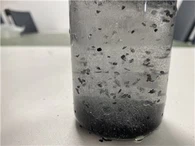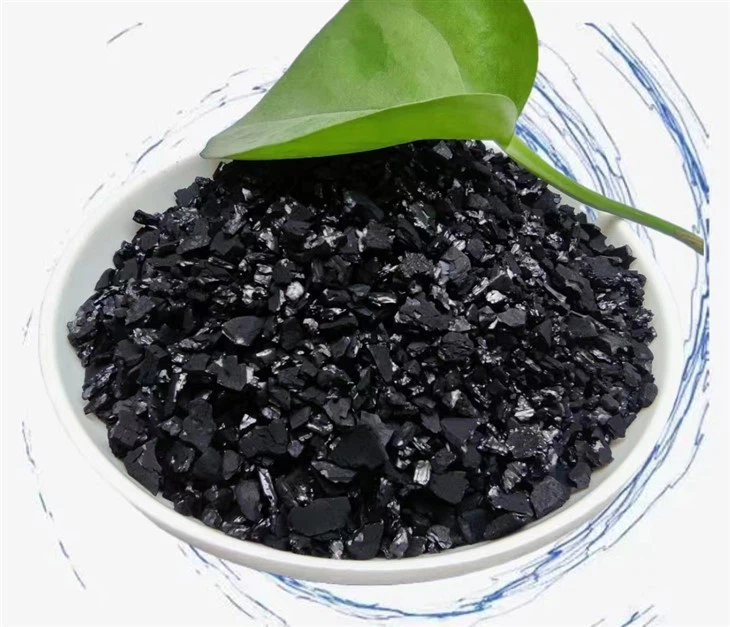
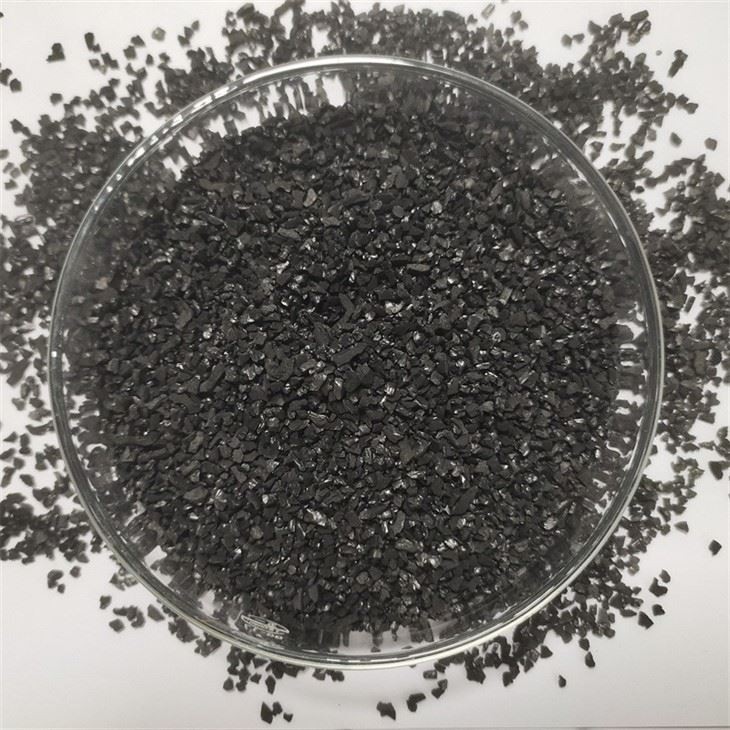


Gold Extraction Coconut Shell Granular Activated Carbon
Coconut shell activated carbon is made of high-quality coconut shells from Southeast Asia, and is refined and processed through carbonization, high-temperature activation, and pretreatment. The product has developed pore structure, large specific surface area, high wear resistance, fast adsorption speed, large adsorption capacity, easy desorption, and can be recycled repeatedly.


It is widely used in the gold extraction process of carbon slurry method and heap leaching method. The activated carbon for gold uses a special process to carry out high-strength shaping on the activated carbon particles, and almost completely removes the needle-shaped, pointed, angular and other easy-to-grind parts of the particles. The particle shape is full and uniform, which greatly improves the wear resistance of the product. After entering the factory, there is no need for pre-grinding, and it can be used directly after washing with water.
| Specification | Value |
| Name | Coconut shell based activated carbon |
| Iodine value | 1000mg/g |
| Filling density | 0.35-0.45g/cm3 |
| Specification surface area | 1200g/m2 |
| Hardness | 99% |
| Moisture | 5% |
| Size | 6-12mesh |
Jacobi Activated Carbon has a very high hardness and is more abrasion resistant than any other type. It is a totally natural,environmentally friendly product, that has a very small carbon foot print, since it is derived from coconut shells.
As most of its pore structure consists of micropores (more than 80%), coconut shell carbon can efficiently absorb impurities with micropore molecular structure, such as those present in drinking water. In addition, because of its high abrasion resistance and exceptional chemical and physical characteristics, only coconut shell activated carbon can support applications such as recovery of gold and other precious metals.


We produce granular activated carbon of different sizes, select high-quality coconut shells as the base material for treatment, carbonization and activation process, resulting in numerous small holes on the surface of activated carbon. The diameter of micropores on the surface of activated carbon is mostly between 2-50nm. Even a small amount of activated carbon has a huge surface area.
Produce line


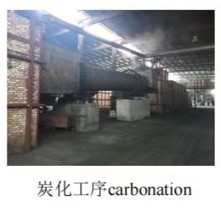

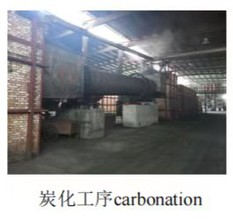
-1) Grinding :crush coconut shell to small pieces.
-2)Extruding:if you want columnar activated carbon, extruding activated carbon to pellets.
-3) Carbonation:carbonized the pellets or coconut shell powder to carbon.
-4) Activation:Physical method and chemical method.
-5)Screening: Separate different size carbon powder.
Activated carbon(granular) how to use in gold extraction
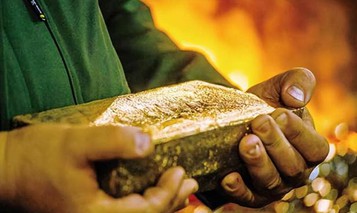
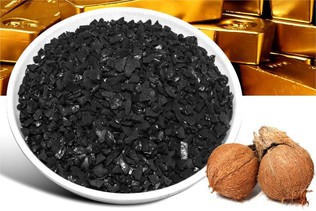
Carbon has a very strong R.A.C. 5000, is widely used for gold extraction or recovery from mined ores.Activated carbon is used to extract gold from cyanide leach liquors.
Assignment Point Activated carbon is added directly to leach tanks, which are designed specifically to accommodate the presence of activated carbon.
To regenerate the carbon after the leaching phase, the adsorbed gold values are desorbed from the carbon by acid washing and subsequent elution with hot caustic cyanide solutions.
Carbon Adsorption In Recovery of gold from leach solutions. because of its ability to recover gold from the gold-cyanide complex. It is known over 70 years that gold in a cyanide leach solution would adsorb to activated carbon.
Depending on the deposit, some silver ores may also be processed via cyanidation.
Carbon Stripping : as a sodium or calcium/gold cyanide ion is desorbed from the carbon by a reversal of the adsorption kinetics.Gold is recovered from the pregnant strip solution by electrowinning onto steel wool. The gold stripped form the carbon typically contains an amount of silver and base metal impurities.
how to choose high quality coconut shell activated carbon
Choosing high-quality coconut shell activated carbon requires considering several key factors. Activated carbon is widely used in various applications, such as gold extraction ,water purification, air filtration, gas adsorption, and more. Here are some important factors to consider when selecting high-quality coconut shell activated carbon:
1.Source of Coconut Shell:
The quality of the activated carbon is heavily influenced by the source of the coconut shells. Ensure that the coconut shells used are of high quality and free from contaminants, as this can impact the final product's effectiveness.
2.Activation Method:
The activation process greatly affects the characteristics of the activated carbon. There are two common activation methods: physical activation (e.g., steam activation) and chemical activation. Steam activation is preferred as it produces high-quality activated carbon with larger surface areas and excellent adsorption properties.
3.Surface Area and Pore Structure:
The efficiency of activated carbon depends on its surface area and pore structure. Higher surface area and a well-developed pore structure (micropores and mesopores) contribute to better adsorption capacity. The surface area is usually measured in square meters per gram (m²/g).
4.Adsorption Capacity:
The adsorption capacity of activated carbon determines its ability to remove impurities. It is measured by parameters like iodine number (mg/g) and methylene blue (mg/g). Higher values indicate better adsorption capabilities.
5.Particle Size:
The particle size of activated carbon can impact its performance in specific applications. Finer particles generally have more surface area and are more suitable for liquid phase applications, while coarser particles are often used in gas phase applications.
6.Ash Content:
Low ash content is essential for high-quality activated carbon. Excess ash can lead to undesirable side reactions and reduce the active sites available for adsorption.
7.pH and Moisture Content:
The pH and moisture content can influence the chemical properties and stability of activated carbon. Ensure that the pH is within an appropriate range, and the moisture content is minimized for better storage and handling.
8.Certification and Testing:
Look for activated carbon that meets international standards, such as ASTM (American Society for Testing and Materials) or ISO (International Organization for Standardization). Manufacturers may provide test reports showing key parameters like surface area, adsorption capacity, and impurity levels.
9.Application-Specific Considerations:
Different applications have specific requirements. Ensure the activated carbon you choose is well-suited for your intended use, such as drinking water treatment, air purification, or gold recovery.
10.Supplier Reputation:
Choose a reputable supplier with a track record of providing high-quality activated carbon. Customer reviews and testimonials can give insights into the supplier's reliability and product quality.
Remember to thoroughly research and compare different products and suppliers before making a purchase. By considering these factors, you can increase the likelihood of selecting high-quality coconut shell activated carbon for your specific needs.